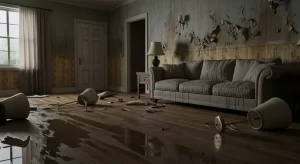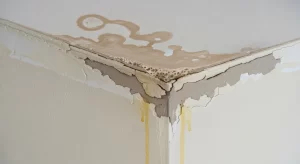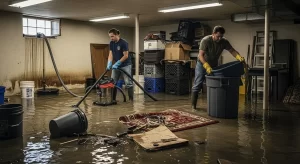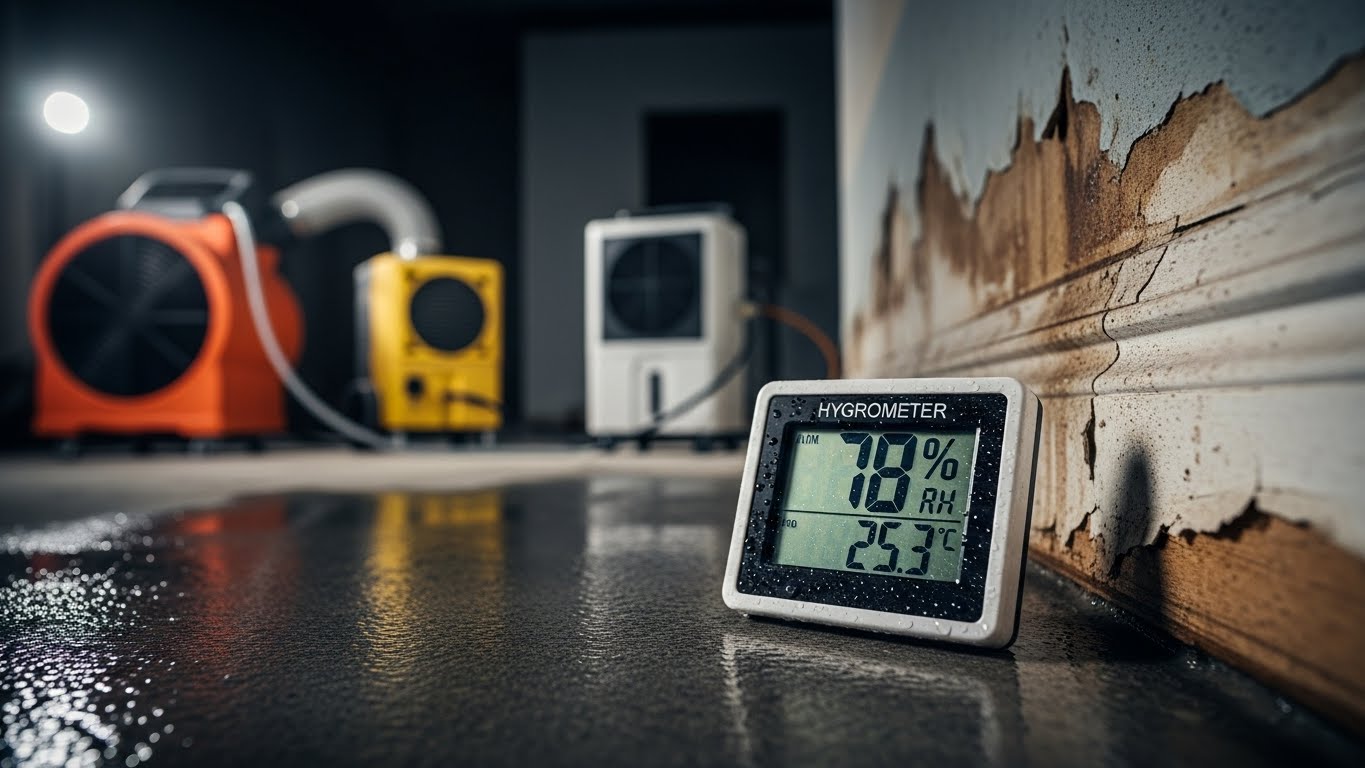

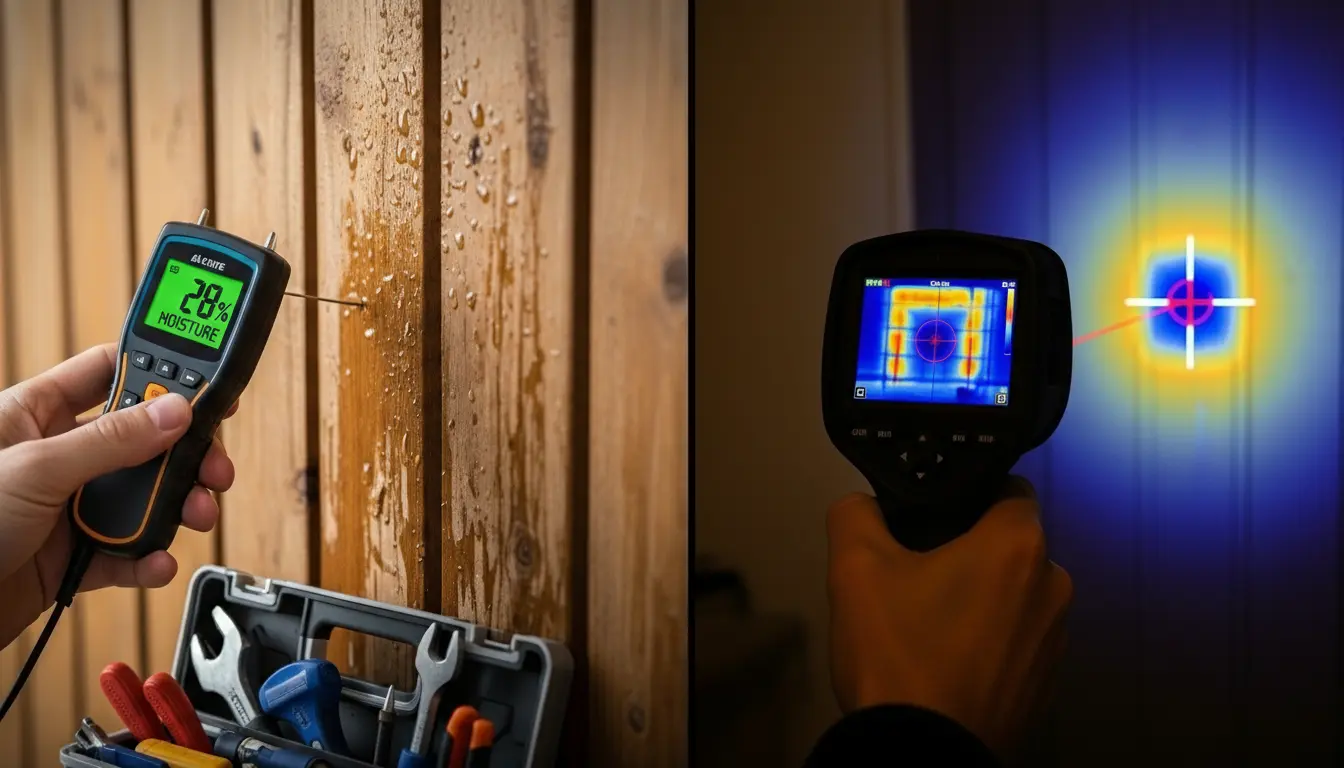
What if the real damage in your home after a flood or sewage backup is not visible at all? Water and moisture usually stay hidden and can quietly destroy your property long before you notice any prominent signs.
That’s why professionals rely on two powerful tools to expose hidden damage before water damage restoration, which are moisture meters and thermal imaging cameras. But which tool works better? Or do you need both? Let’s find out the difference between moisture meters and thermal imaging.
In this blog, you will receive the assistance you need to understand how moisture meters and thermal imaging work together to identify hidden water issues and why selecting the right tool is essential in protecting your property.
What Is Hidden Moisture & Why It’s a Problem?
Moisture that stays behind walls, under floors, or inside ceilings for a long time is usually hidden. It is caused by leaking pipes, poor drainage, condensation, flooding in basements, cracked foundations, roof leaks, or even high humidity.
It can also cause unseen damage but shows prominent signs such as musty odor, discoloration, dampness, etc. The hidden moisture leads to:
- Mold growth, which poses health risks and can spread rapidly
- Structural issues like wood and drywall weaken over time
- Poor indoor air quality
- Necessary costly repairs later
What is a Moisture Meter?
A moisture meter is a small tool that you can use to measure the moisture range in building materials like wood, drywall, concrete, plaster, insulation, and flooring materials. These devices are commonly used in property inspections, mold investigations, and restoration projects to find out if a material is dry, damp, or water-damaged.
Types of Moisture Meters
There are two common types of moisture meters such as:
Pin‑Type Meters
In pin-type moisture meters, two metal pins penetrate the material to measure electrical resistance, and if there is more moisture, there will be lower resistance.
This type gives a quantitative measurement of moisture content, and it is displayed as a percentage. It’s useful when you need particular moisture data, especially in wood or dense materials.
Pinless Meters
These moisture meters use radio frequency to scan the surface without penetration. They are perfect for quick scanning over large areas and don’t damage the surface. However, they provide qualitative or relative moisture levels instead of actual percentages.
Some modern meters even combine both pin and pinless functions to give professionals the flexibility to scan extensively and then highlight accurate moisture levels where required.
Advantages of a Moisture Meter
- Provides clear, numerical data on moisture content
- Works on a wide range of materials
- Easy to carry and use during inspections
Limitations to Consider
Moisture meters are great for detecting dampness in materials, but they have limits. They only measure moisture where you test; they can’t see deep inside walls or under floors.
Readings can also be affected by temperature, metal objects, or surface condensation, which might lead to false results.
Moreover, they cannot tell you where the moisture is coming from or if there is mold. They just show if a spot is wet. That’s why it is used with other tools like thermal cameras for a full picture.
Also read: How Restoration Technicians Use Moisture Meters During Cleanup?
What is Thermal Imaging?
Thermal imaging cameras don’t measure moisture directly. They detect temperature differences on surfaces and create visual images based on temperature. Moist areas often show temperature changes due to evaporation, conduction, and varying thermal properties compared with dry materials.
A thermal image shows these variations in a color‑coded format, where cool areas appear blue and warm areas show as red or orange, which helps inspectors identify moisture zones that need further investigation.
How Thermal Imaging Detects Water Issues?
Thermal cameras detect the infrared radiation coming out of objects and display it into a visual representation of temperature.
Moisture causes slight temperature differences because wet materials absorb and release heat differently from dry ones.
Thermal imaging can’t see water itself; these temperature variances usually point out the presence of hidden moisture.
Strengths of Thermal Imaging
- Do not involve cutting, drilling, or surface damage
- Large‑area scanning and are useful for surveying wide areas quickly
- Helps spot irregularities that may go unnoticed
- Images serve as visual proof for reports or insurance claims
What Thermal Imaging Can’t Do Alone?
Thermal imaging is powerful, but it is not foolproof. It cannot confirm moisture presence by itself, but temperature differences may be caused by insulation gaps, airflow, sunlight exposure, or thermal bridges, not water. Because of this, you can use thermal imaging with other data, like moisture meter readings, for accuracy.
Moisture Meters vs Thermal Imaging
Both may look like competing technologies, but in reality, they complement each other.
- Moisture meters give accurate moisture levels in specific spots, but can miss moisture deep inside or hidden behind materials.
- Thermal imaging provides a big‑picture view of temperature irregularities across surfaces and reveals suspect areas rapidly.
Moisture Meters vs Thermal Imaging: Detailed Comparison
| Feature / Factor | Moisture Meters | Thermal Imaging Cameras |
|---|---|---|
| Primary Purpose | Measure actual moisture content in materials | Detect temperature differences caused by moisture |
| How It Works | Uses pins or sensors to measure moisture levels inside materials | Uses infrared technology to show heat patterns on surfaces |
| Accuracy | Highly accurate for confirming moisture presence | Indirect, shows moisture patterns but not exact moisture levels |
| Depth Detection | Can detect moisture inside materials (especially pin-type meters) | Limited to surface or near-surface temperature changes |
| Contact Required | Yes (must touch the surface) | No (scans from a distance) |
| Speed of Inspection | Slower, requires multiple readings | Very fast, covers large areas quickly |
| Best For | Confirming moisture, monitoring drying progress | Locating hidden water damage and affected areas |
| Material Compatibility | Works on wood, drywall, concrete, and other building materials | Works on most surfaces without direct contact |
| Damage to Surfaces | Pin meters may leave small holes | Completely non-invasive |
| Ease of Use | Simple and straightforward | Requires training to interpret images correctly |
| Cost | Relatively affordable | More expensive |
| Use in Water Damage Restoration | Essential for verification and documentation | Ideal for initial assessment and mapping moisture spread |
| Limitations | Time-consuming for large areas | Cannot confirm moisture without a meter |
How to Choose the Right Tool For Water Damage Restoration?
When deciding between water damage detection equipment, you have to consider the following factors:
- Consider your goal, whether you are locating moisture broadly or do you need accurate readings?
- Analyze the property type because different materials and structures may affect how moisture presents itself.
- Check your skill level in thermal imaging interpretation, which often benefits from training.
- Consider your budget because high‑resolution thermal cameras are expensive, and moisture meters are generally more affordable.
How Experts Use Both Tools Together?
For thorough moisture inspection or water damage analysis, the inspection team scans walls, floors, ceilings, and structural components with a thermal camera to highlight suspicious temperature differences that may indicate moisture presence.
After identifying the area, the professional uses a moisture meter to take readings and to confirm whether moisture is present and how much it is. They document the findings from both tools to create a complete picture of moisture conditions for reports, insurance claims, or restoration plans.
This combined approach helps professionals detect hidden issues early, plan remediation effectively, and reduce long‑term damage.
NSH Home Services- Your Partner for Water Damage Detection & Restoration
For water damage restoration in NJ, you can comfortably choose NSH Home Services. The team specializes in water damage detection and restoration using the latest professional tools, including advanced moisture meters and thermal imaging cameras.
When you hire us, our experienced professionals perform detailed thermal scans to locate hidden moisture, confirm findings with meter readings, and develop efficient restoration plans that protect your property and health. Call us today.