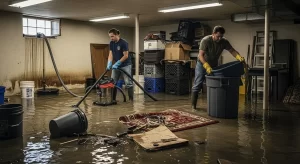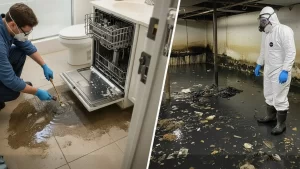

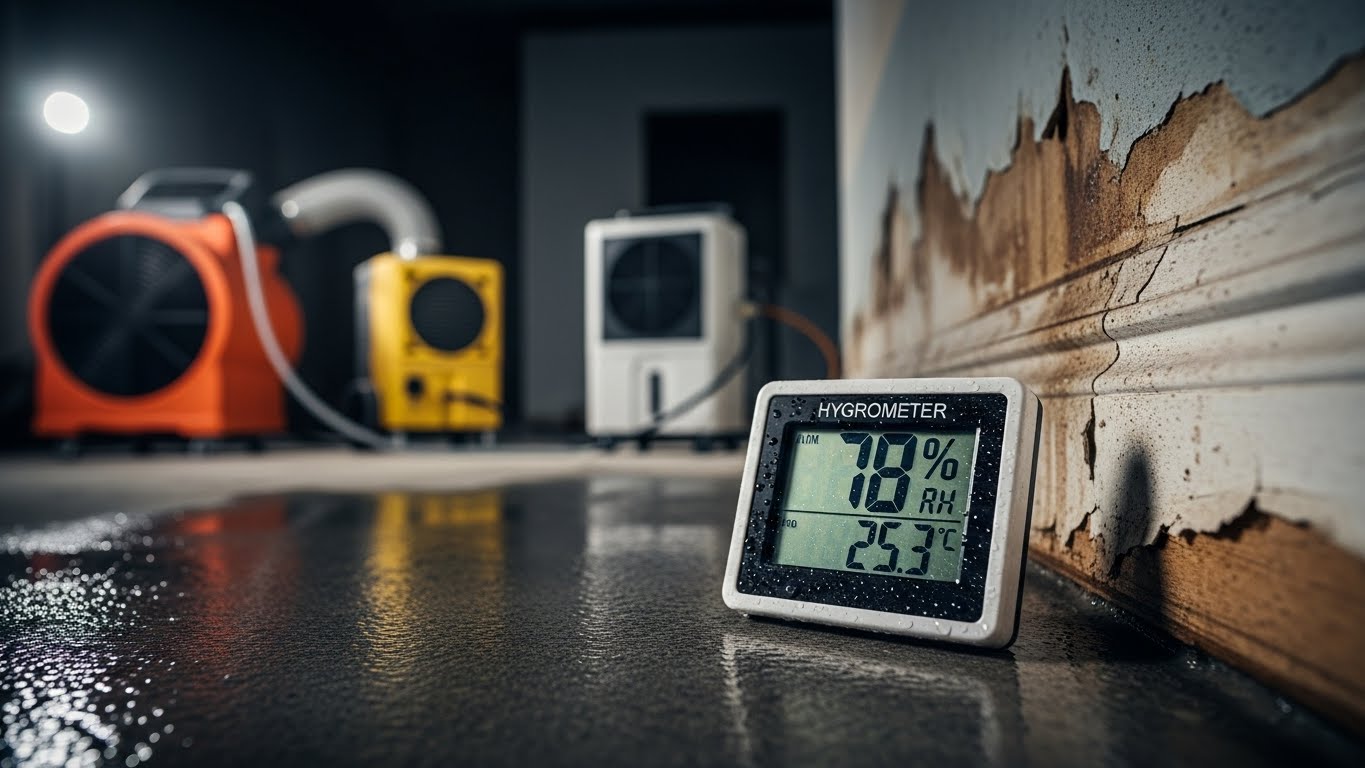
Drying water after a water disaster is not about placing fans and waiting for surfaces to dry. The hidden moisture goes deep inside the walls, and structural materials that cause issues like mold growth, material failure, and costly rework.
But how do you know whether the air is helping the drying process instead of slowing it down? How can a space that looks dry but holds moisture cause damage weeks later?
Psychrometrics helps you understand what the eye can’t see when it comes to water damage restoration. Spare a few minutes and learn why psychrometrics matter in water damage drying!
What is Psychrometrics?
Psychrometrics is the branch of science that deals with the physical and thermodynamic properties of gas-vapor mixtures, you can say air and water vapor. When water damage hits, understanding how moisture moves and behaves in the air becomes important because you cannot dry a building until you control the moisture in the air. The restoration team does not rely on guesses, as it is a risky approach, but uses advanced psychrometric tools to measure:
- Temperature
- Relative Humidity (RH)
- Dew Point
- Specific Humidity (grains per pound or GPP)
The Role of Psychrometrics in Water Damage Drying
Water never stays in one place; it evaporates, migrates, and hides in cavities. Psychrometrics gives professional water damage restorers the data to manage this moisture. The measurements guide which equipment to use, where to place it, and when the structure is fully dry.
It also selects the drying system based on humidity, temperature, and outdoor conditions. Even for real-time adjustments, psychrometric data allows equipment settings to maintain optimal drying conditions. With this, professionals ensure fast and safe drying.
Equipment and Tools Used
Here are a few psychrometric tools in a restoration professional’s arsenal:
- Thermo-hygrometers to measure temperature and RH
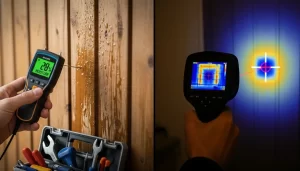
- Moisture meters that check water content in materials
- Infrared cameras to spot hidden moisture
- Desiccant or refrigerant dehumidifiers, chosen based on psychrometric readings
- Psychrometric software or charts to track drying progress day-by-day
How Psychrometrics Works in the Drying Process?
Let’s learn how science works and how water damage restoration services follows a structured approach to remove moisture from the surfaces:
Initial Assessment
Before drying begins, professionals measure moisture levels using moisture meters and thermal imaging. Psychrometric data provides a baseline for temperature, relative humidity, and dew point to define target drying goals.
Equipment Placement
Based on these moisture level measurements:
- Air movers circulate dry air over wet surfaces.
- Dehumidifiers remove moisture from the air.
- Heaters adjust temperature to improve drying efficiency.
The purpose is to create a strong vapor pressure that moves moisture out of materials.
Monitoring and Adjustment
Professionals continuously track relative humidity (RH), dew point, and temperature. They adjust equipment in real-time to maintain the optimal drying environment, preventing condensation, over-drying, or slow drying.
Verification and Documentation
Drying is complete only when psychrometric readings confirm:
- Moisture levels have stabilized within safe limits.
- Materials have returned to normal moisture content.
- Vapor pressure differences are minimal and indicate no further moisture migration.
This ensures the property is fully restored and ready for living again.
Also Read: How Restoration Technicians Use Moisture Meters During Cleanup?
Benefits of Using Psychrometrics in Water Damage Restoration
It provides the following benefits:
Fast and Efficient Drying
Careful control of temperature and humidity reduces drying time compared to other methods. It can save labor and equipment costs.
Reduced Secondary Damage
By maintaining correct moisture levels, psychrometrics prevent mold growth, odors, and structural deterioration and save the property from further damage.
Material Protection
Different materials dry at different rates. Professionals having knowledge about Psychrometric monitoring can protect wood, drywall, and concrete from cracking, warping, or shrinkage.
Compliance and Insurance Support
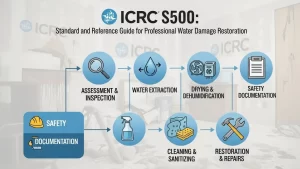
Documented psychrometric readings help meet industry standards like IICRC S500/S520 and support insurance claims with solid evidence.
Why Ignoring Psychrometrics Can Be Costly?
If you guess whether the structure is dry or simply rely on visual inspection alone, it can lead to over-drying, under-drying, or mold growth. This results in expensive repairs, health risks, and insurance disputes. Psychrometrics removes uncertainty and ensures predictable results.
Contact NSH Home Services to Ensure Complete Structural Drying!
When water enters your property, contact NSH Home Services immediately if you are living in New Jersey. We are a certified company for water damage restoration in NJ, with a professional team, always ready to respond in emergencies like floods, leaks, and storm damage.
Our process is not just about extraction; it includes the drying process by using advanced psychrometric techniques to monitor and control air temperature, humidity, and moisture levels. We ensure complete restoration so your property returns to a safe and healthy condition.
Frequently Asked Questions
What is the purpose of psychrometry in restorative drying?
The purpose of psychrometry in restorative drying is to measure and control air conditions to remove moisture from wet materials. It helps in understanding how temperature, humidity, and moisture interact inside a structure and let them create the right drying environment.
Can psychrometrics help with insurance claims?
Yes. Documented psychrometric readings provide proof that proper drying procedures were followed. This documentation also supports insurance claims and helps avoid disputes about incomplete or improper drying.
What is the difference between psychrometrics and a psychrometer?
Psychrometrics is the science of air and moisture behavior and provides solid data. A psychrometer is a tool used to measure air conditions such as temperature and humidity and explains how to use that data for drying decisions.
How long does structural drying usually take?
Structural drying almost takes 3 to 5 days, depending on the extent of damage, materials involved, and environmental conditions. Psychrometric monitoring helps keep drying on track and prevents unnecessary delays.